Commercial property maintenance for security, durability and cost-effectiveness
Professional building maintenance measures ensure the reliable and secure operation of buildings throughout their entire life cycle. Find out what types of maintenance there are, what you need to bear in mind, and how to draw up a practical planned preventative maintenance schedule for buildings.
What is building maintenance?
Building maintenance encompasses all measures designed to ensure that buildings and technical systems remain in the required condition throughout their entire life cycle – from regular, scheduled maintenance and inspections to repairs in the event of faults, as well as targeted improvements aimed at optimising availability, security and cost-effectiveness. It helps to maintain safety-critical functions in both normal and emergency situations and to safeguard the usability and value of properties in the long term.
How does building maintenance work differ from building upkeep?
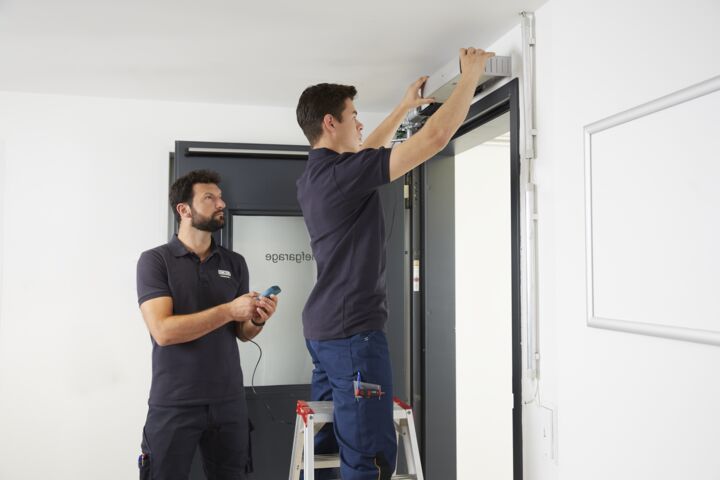
Maintenance is a sub-area of building management, and ensures reliable and secure building operation. © Karin Fiedler / GEZE GmbH
Maintenance is a sub-category of upkeep, and refers to recurring, scheduled activities that ensure functionality and operational safety.
Maintenance tasks include, for example:
- Interval-based inspections: Regular inspections carried out at fixed intervals (e.g. monthly, quarterly or annually)
- Maintenance tasks: Lubrication, adjustment and cleaning to ensure proper operation
- Functional tests: Systematic testing of safety- and operation-critical components (e.g. door closers, fire door holders, drives)
The aim of maintenance measures is to prevent breakdowns, to fulfil or support operators’ obligations, and to make costs predictable in the long term.
Whilst building maintenance services, as part of general maintenance, are primarily preventative (e.g. inspecting and adjusting door systems), general maintenance goes a step further: it rectifies faults, repairs components and restores full functionality where necessary. This ensures that door, window and building automation systems remain reliable over the long term, enabling operators to fulfil their obligations more reliably and making it easier to plan operating costs in the long run.
What types of maintenance are there?
Various strategies are employed in building maintenance services – depending on the intensity of use, safety requirements and the desired level of predictability. Typical types of maintenance include:
- Preventive (proactive/planned): Regular maintenance and scheduled inspections to prevent breakdowns and ensure operational safety.
- Condition-based: Actions are triggered by the actual condition of the system, e.g. based on inspections, measured values or diagnostic messages from the building automation system.
- Predictive (proactive): Data-driven analysis of status and running data from the building automation control system (BACS) to identify anomalies at an early stage and plan maintenance measures proactively. This requires suitable technical systems, data availability and appropriate integration.
- Corrective action (reactive/failure): Repair following faults or breakdowns – including fault diagnosis, repair, replacement and recommissioning.
- Improvement (optimisation): Targeted adjustments and upgrades to sustainably enhance reliability, security and efficiency.
Why is preventative building maintenance important to extend building service life?
Maintenance of buildings extends the service lives of buildings by ensuring that structural elements and technical systems remain in good working order and by addressing wear and tear and damage at an early stage. Regular inspections and servicing by building repair contractors prevent further damage, reduce downtime and ensure that safety-critical systems such as doors, windows, smoke and heat extraction systems and building automation solutions remain in reliable working order. Particularly in sensitive areas such as hospitals, manufacturing environments or heavily frequented public buildings, faults or the failure of individual systems can have significant operational and financial consequences.
Against this backdrop, investing in commercial property maintenance also pays off financially – through predictable budgets, fewer costly faults and better overall control of operating and repair costs.
Furthermore, a consistent maintenance strategy enhances sustainability: existing systems are used for longer, resource consumption and replacement cycles are reduced, and the carbon footprint over the product life cycle is lowered.
Checklist: How do you draw up a building maintenance schedule?
A building maintenance schedule ensures that buildings and technical systems are operated reliably, safely and cost-effectively – with clear measures, intervals and responsibilities.
To create a structured, practical maintenance plan, requirements, facilities and measures are translated into a clear, verifiable process:
- Define objectives and framework conditions (security, budget, sustainability, operator obligations)
- Record all inventory (assets, components, locations, documents, history)
- Consolidate requirements (manufacturer specifications, standards and guidelines, testing and documentation requirements)
- Set priorities and assess risks: classify systems and components according to their safety relevance and the consequences of a failure (e.g. downtime, consequential damage, increased costs)
- Define a maintenance strategy (preventive, condition-based, predictive, corrective, improvement-oriented)
- Describe the measures for each system in detail (tasks, scope of testing, acceptance criteria, documentation)
- Define intervals and trigger mechanisms (frequency, cycles, measured values, fault messages)
- Plan resources (responsibilities, qualifications, new hires, service windows, spare parts, tools)
- Standardise documentation and record-keeping (checklists, reports, defect and deadline management)
- Evaluate and optimise operational performance: regularly review key performance indicators, faults and costs, and tailor the maintenance scope and intervals accordingly. Analyses also provide signals indicating the need for upcoming modernisation or building renovation.
We support you in modernising your building – from on-site advising to planning and ordering, to commissioning.

Our expert tip for smart commercial property maintenance: building automation and BIM
When they work together seamlessly, two key elements deliver the greatest benefits for efficient building repair services:
- Building automation: Consolidates operational and fault messages, trends and status data from technical systems (e.g. door, smoke and heat extraction, ventilation or access solutions). This makes it possible to identify deviations more quickly, trigger targeted measures and improve availability during operation.
- BIM (Building Information Modelling): Uniquely identifies building components and systems and links them to relevant information such as installation location, technical specifications, maintenance intervals, documents and test certificates. This ensures transparency throughout the life cycle, speeds up planning of measures and facilitates audit-proof documentation.

